Category Archives: Kanji

今月の文化 2018年9月 シルバーウィーク

みなさんこんにちは。
Hello everyone.

今年は台風がたくさんあって大変な夏でしたが、ようやく涼しくなってきて、秋になったように感じます。涼しいと色々な所に出かけたくなりますね。
The summer this year was terrible due to the many typhoons. Finally it has cooled down and it feels like fall has come. When it’s cool like this I want to go out to many places.

さて、9月はもうすぐ終わりになりますが、9月は連休が多いので、とても早く終わるように感じます。9月の祝日は、敬老の日と秋分の日の2つです。秋分の日は毎年変わるのですが、敬老の日は9月15日です。しかし、1935年にハッピーマンデーという制度が始まってから、敬老の日を月曜日にお祝いするようになりました。土曜日と日曜日と合わせて3連休にするためです。今年は秋分の日が9月23日(日)だったので、24日が振り替え休日になり3連休になりました。
Well, September is almost over. Since September has many holidays, it feels like it goes by quickly. September’s holidays are Respect for the Aged Day and the Autumn Equinox. The Autumn Equinox changes every year, and Respect for the Aged Day is on the 15th. In 1935 the “Happy Monday” policy began which caused holidays to be observed on Mondays. This was to create more three day weekends. The Autumn Equinox was on the 23rd this year, but was observed on the 24th in order to make a three day weekend.

この2回の祝日ですが、実は秋分の日が水曜日になると良い事があるのです!1985年に、法律の改正があって、祝日と祝日の間に1日だけあるときは、「国民の休日」という休日になる事になったのです。そのため、土曜日―日曜日―敬老の日―国民の休日!-秋分の日という5連休ができる可能性があるのです!
When there are two close holidays like this, it is best if the Autumn Equinox falls on a Wednesday. This is because in 1985, a new law passed which creates an extra day off when there is only one regular day between two holidays. Thus, in such as case, you would have Saturday, Sunday, Monday, Tuesday, and Wednesday off! The Autumn Equinox has the potential to give us a 5-day long holiday.

この5連休の事をシルバーウィークと呼ぶそうですが、残念な事にこのシルバーウィークはとても珍しいです。過去には2009年と2015年にありましたが、これからはしばらくありません、次回のシルバーウィークは2026年だそうです。
When this 5-day long holiday happens, it is called Silver Week. Unfortunately, Silver Week is very rare. The last time Silver Weekend happened was in 2015, and 2009 before that. The next time it will occur will not be until 2026.

ゴールデンウィーク(黄金週間)に比べて、9月に5連休になる可能性がとても低いので、シルバーの代わりにプラチナ(白金)週間と呼ばれることもあるそうです。おもしろいですね。
Compared to Golden Week in the spring, September’s five day holiday is very rare. As a result, sometimes people call it Platinum Week instead of Silver Week. How silly!

それではまた、10月に!
See you in October!

今月の文化 2018年8月 台風

今月の文化 2018年8月
This month’s culture lesson (August 2018)

こんにちは!
Hello everyone!
もう8月になってしまいました。早いですねー。
I can’t believe it’s already August! Time sure flies.

去年の8月にはお盆について話しました。今年はとても台風が多くて、困ってしまったので、今月は、台風について話をしようと思います。
Last year, I talked about Obon during August. This year, since Japan has been plagued by a number of bad typhoons this month, I’d like to talk about typhoons.

台風は日本では名前ではなくて番号をつけます。番号は1月1日にリセットされて、毎年1号から始まります。
In Japan, typhoons are referred to by number instead of name. The numbers reset on January first, so every typhoon season starts with “Typhoon No. 1.”

台風が多いのは8月から10月までの間です。一番多いのがだいたい9月ごろです。
Typhoons are most frequent between August and October. September usually has the most typhoons.
最近は異常気象のために台風の発生数も多く、発生する時期もはやくなっているように思います。
Recently there has been a lot of abnormal weather, and so the number of typhoons has increased. Typhoons are also appearing earlier and earlier in the year.

過去に大変大きな被害を出した台風があって、昭和の「三大台風」と呼ばれています。
The three most destructive typhoons of the past are called Showa’s “Three Great Typhoons.”

1934年の室戸台風(むろとたいふう)と、1945年の枕崎台風(まくらざきたいふう)と、1959年の伊勢湾台風(いせわんたいふう)です。
They are 1934’s Muroto Typhoon, 1945’s Makurazaki Typhoon, and 1959’s Isewan Typhoon.

2つ目の枕崎台風は、1945年の9月17日に鹿児島県に上陸したそうです。その後日本を縦断して、とても大きな被害を残したそうです。
Number 2, The Makurazaki Typhoon, made landfall on September 17th, 1945 in Kagoshima Prefecture. After that it blew across Japan, causing great damage in its path.
この台風は終戦後1カ月しかたっていない時に来たので、広島の人々は特に大変な思いをしたという記録が残っています。
This typhoon struck not one month after the end of the Pacific War, and records show that it was especially difficult on the people of Hiroshima.

3つ目の伊勢湾台風は、1959年の9月27日に発生しました。非常に大きな台風で、日本では死者と行方不明者を合わせて5000人になったという事です。行方不明になった人も多数いて、本当に被害が大きな台風だったという記録があります。
Number 3, the Isewan Typhoon, struck on September 27th, 1959. It was an especially powerful typhoon, and there were over 5000 reported deaths and missing persons as a result. Due to the large number of missing persons, it is recorded as being and incredibly destructive typhoon.

私は子供のころから台風が好きでした。なにか台風が来る少し前の天気は、薄暗くて空気が重くて、外に誰もいないので、なにか違う世界に来たような気がしてウキウキしました。
Since I was a child, I have liked typhoons. The weather before a typhoon comes is gloomy and the atmosphere is heavy. There are no people outside either, so it felt like I was in a different world and made me excited.
大人になっても嵐の前の雰囲気は好きですが、建物がこわれたり、木が倒れたり、田畑で収穫ができなくなったりと、悪い事の方が多いですからあまり来てほしくないですね。
Even as an adult, I like the atmosphere before a big storm. However, since buildings can be damaged, trees can fall down, and harvests can be ruined, the bad parts outweigh the good and I don’t really want them to come anymore.


今月の文化 2018年7月 打ち水

こんにちは。7月になりましたね。

今年の夏は世界で記録的な暑さになっています。みなさんの地域はどうでしょうか?
日本でも毎日40℃(104℉)くらいの気温になっている所もあるようです。熱中症という病気になる人もたくさんいます。
This summer we are having record breaking heat. How is your region? In Japan, some areas have been recording temperatures of 104 degrees F every day. A lot of people have gotten heat stroke due to the weather.

エアコンをつけることで部屋の中を涼しくすることはできますが、外を涼しくすることは難しいですね。
外を涼しくする方法の一つに、「打ち水(うちみず)」というものがあります。これは、外に水を撒くことでアスファルトの中に熱がたまることを防いだり、気化熱(きかねつ)によって周囲の温度をさげ、涼しくなることを言います。
打ち水の習慣は500年以上前からあるようです。俳句や浮世絵の中に打ち水のようすが描かれています。
AC can cool the inside of a room, but it’s difficult to make the outside cooler. One way to make it cooler outside is called “uchimizu.” Uchimizu is the sprinkling of water on the ground. When the ground gets wet and cools down, it can prevent the asphalt from becoming over-heated. Also, it can remove heat by evaporation and make the ground temperature lower. Uchimizu has been done since more than 500 years ago. Uchimizu appears in some haiku and ukiyoe from that era.

打ち水は日陰ですることで効果が出ます。日なたの熱い所に水をかけても、すぐに蒸発してしまって意味がありませんし、湿度があがって蒸し暑くなります。
気温が上がりすぎていない朝と夕方にするのが効果的だそうです。
Uchimizu is effective when you do it in the shade. If you do it in the sun the water evaporates immediately and just creates more humidity. Mornings and evenings are the most efficient times to do uchimizu.

熱中症にならないように、みなさん外出するときは気を付けましょうね。
Let’s be careful when going out! We don’t want to get heat stroke.

それでは、また8月に!

今月の文化 2018年6月 梅雨

こんにちは!6月ももうそろそろ終わりですね。
Hello! It’s almost the end of June.

最近は雨が降ることが多くて、気温も高くて湿度も高いので、不快な天気です。このように、湿度と気温が高く、雨が多い6月くらいの時期の事を、「梅雨」といいます。
It’s been rainy and humid and hot! This is very uncomfortable weather. This kind of weather happens around the end of June and is called tsuyu.

私の一番嫌いな季節です。みなさんの国にも梅雨はありますか?
どうしてこの時期の事を「梅雨」と呼ぶのかというと、色々な説がありますが、一つは梅の実が熟す頃だからだと言われています。
確かに、最近はスーパーなどで梅をよく見かけます。日本では自分の家で梅ジュースや梅酒を作るのが盛んです。梅雨の時期にスーパーに行くと、梅酒を作るキットをたくさん見ることができます。
Tsuyu is my least favorite season. Does tsuyu or something similar exist in your country?
The reason people call it 梅雨(梅:Plum and 雨:rain) is that June is the season when plums become fully grown. In fact, I’ve seen a lot of bags of plums at the supermarket recently. Making plum juice and homebrewed plum wine is a common hobby in Japan. You can see a lot of “plum wine kits” on sale at supermarkets in this season. It looks easy to make.

梅雨が始まる事を「梅雨入り(つゆいり)」または「入梅(にゅうばい)」といい、梅雨が終わることを「梅雨明け(つゆあけ)」と言います。この、梅雨の期間はだいたい一か月くらいだと言われています。
The start of tsuyu is called 梅雨入り(tsuyuiri) or 入梅(nyubai) and the end of tsuyu is called 梅雨明け(tsuyuake). The duration of tsuyu is about one month.

この時期には急な大雨や食品のカビに気を付けないといけません。最近は異常な大雨が各地で降ることがありますので、天気予報を確認してでかけたほうがいいと言われています。
In this season, we need to be careful of sudden heavy rain and food getting moldy due to the extreme humidity. Recently extremely heavy rainstorms have occurred in several locations, so we have to check the weather forecast before going out.

北海道にはあまり梅雨がないそうですから、6月くらいは北海道に旅行に行く人が多いようです。6月には祝日が一日もありませんし、梅雨が来ますし、あまりいい季節ではありませんが、北海道に旅行するにはいい時期かもしれませんね。
Hokkaido doesn’t seem to have tsuyu in June, so many people travel to Hokkaido. June doesn’t have any holidays, and it’s a rainy month, so it’s not really a great month. But it may be good for traveling to Hokkaido!

それではみなさん、また7月に!

今月の文化 2018年5月 こどもの日

こんにちは!
5月になりましたね。5月は木々が鮮やかな緑になり、気温も暑すぎないし、寒すぎないのでとても過ごしやすいです。5月にはゴールデンウィークもあるし、気持ちがウキウキする月ですね。
Hello!
It’s May already. The trees have turned bright green. It’s not too hot or too cold, so I think it’s a relaxing month. The long vacation called Golden Week is in May, so May is a exciting month too.

5月5日は「こどもの日」と呼ばれていますが、本来は「端午の節句」という名前で、男の子の成長を願う日です。端午というのは、5月最初の午の日という意味でしたけれど、午(ぎゅう)が5(ご)という文字の音に似ているので5月5日にお祝いをするようになりました。
May 5th is known as Childrens’ Day, but originally it was called Tango no sekku. In that day, people hoped for boys to grow healthily. Tango refers the first “cow” day (part of the old calendar system) in May, but since the word cow sounds like five in Japanese, people started celebrating it on May 5th.

この日には、五月人形や鎧や兜を飾ったり、こいのぼりを飾ったりしています。鎧や兜は、命を守る道具なので、男の子が安全に暮らせるように祈って飾っています。また、五月人形は強くてたくましい男の子になるようにという願いを込めて飾ります。
On May 5th, people decorate their houses with yoroi (armor), kabuto (helmets), or koinobori (carp streamers); especially people who have a young boy in the house. Yoroi and kabuto are for protecting the body, so people display them as wish for their children’s safety. People also display gogatsu ningyo, hoping that their children will become strong like the dolls.

今月の文化 2018年4月 お花見

4月になりました。毎年、4月は桜が咲きますし気温が高くなりますから春になったような気持ちになりますが、今年はとても暖かい日と寒い日があったのであまり春になった気持ちがしませんでした。

It’s April! In April, the temperature goes up and you can see cherry blossoms. You can feel finally that spring has come. However, this year we have had very hot days and cold days in April, so it’s been hard to feel the joy of spring.

3月の終わりにとても暖かくなって桜が満開になりましたが、その後すぐに気温が下がり、なんと雪が降ってしまいました。この写真は4月の8日の写真です。小さな山の上で写真を撮ったのでまだ少し桜が咲いていました。桜と雪の写真はとてもめずらしいと思います。

In the end of March, it got very warm here. All of the cherry blossom bloomed. In a few days, the temperature dropped and even snowed! I took this picture on April 8th in the mountains. There were some cherry blossoms still blooming and snow was covering the tree. This is a very rare sight to see.

さて、今月は桜が咲いている期間が短くて残念だったのですが、少しだけお花見をしました。夜に桜の並木の下を歩くと、ライトアップされた桜の下にたくさんの屋台があって、人々がパーティーをしたり桜を楽しんでいたりして、とてもにぎわっていました。
お花見でパーティーをするときは、特に何をすると決まっていることはありませんが、一般的に、桜の下に敷物(しきもの)を敷いて、その上でお酒を飲んだり、お弁当を食べたりします。カラオケの機械をもってきて、カラオケをしたりする人たちもいますが、あまりうるさいと他の人の迷惑になりますね。お花見をするときに大事な事は、ごみをちゃんと持って帰るという事です。花見の後に公園が汚くなると、桜もかなしくなってしまいますね。

We were able to enjoy cherry blossoms for only a brief moment this year, but we enjoyed it. Wandering around at night under lit-up cherry blossoms was really fun. There were a lot of food vendors and people having parties. Parties under the cherry blossoms are called ohanami. There are no rules about what to do at ohanami, but generally people lay a thin carpet on the ground under the trees, and have drinks and bento. Some people bring karaoke machines, but it can be too noisy. The most important thing to do at ohanami is to bring your trash home. For the beautiful cherry blossoms’ sake, we need to keep our parks clean. 😊

今月の文化 2018年3月 ひな祭り

3月ですね。
It’s March.

3月になると、やっと春になってきたような感じがしますが、今年は冬が長くて寒い日が続いていますね。アメリカでは3月に3回も冬の嵐があったようです。不思議な天気ですね。
In general, you can start to feel spring in March, but this year’s winter has been strong for a long time. I heard that there were three snow storm in the US this month. The weather has been very weird.

3月の有名な行事は「ひな祭り」です。ひな祭りは、現代では「女の子の日」として、女の子供が健康で幸せな人生をおくることを願う日になっています。昔の中国では、節分と同じような行事で、女の子には関係のない行事でしたが、日本に来てから日にちが3月3日に決められて、女の子供の成長を願う行事に変わりました。
One famous event in March is “Hinamatsuri.” Hinamatsuri is known as a girls’ holiday, but it originated in China, where it was like Setsubun and had no connection to girls. When the holiday was brought to Japan its date was set to March 3rd and it developed its connection to girls.

ひな祭りの日には、桃(もも)の花を飾って、ひな人形を出して、ちらし寿司を食べて、お祝いします。ひなあられというかわいくて甘いお菓子も食べます。
On Hinamatsuri, people decorate their houses with peach flowers. Peach trees bloom in March, before the cherry blossom. Families which have young girls put up hina dolls, and eat chirashi-zushi and hina-arare–cute, sweet candies.

私は子供の時からひな人形が大好きでした。着物や人形がとてもきれいで、小さいミニチュアの物がたくさんあって、見ていると嬉しい気持ちになりました。
When I was young, I really liked my hina dolls. I could only see them once a year. The dolls and the kimonos were so beautiful, and there were so many detailed miniatures displayed alongside the dolls. Looking at my hina dolls made me feel very happy.

ひな人形は7段の階段に乗っています。実際に人形が乗っているのは5段だけなので、5段だけのひな人形も売っています。お店に行くと、一番上の2体の人形だけのひな人形も売っています。アパートなど、狭いところでは大きなひな人形を出すことは難しいですから、小さなひな人形だけを出すところもあります。
この人形を出したり片づけたりするのは大変ですから、最近は簡単に出せる人形を買う人が多いようです。
Hina dolls are displayed on seven steps. Two of the steps contain miniature decorations, and the dolls themselves are on the five remaining steps. Some people buy smaller sized hina doll diplsays, like five-step displays or two-doll-only displays. In an apartment, there is no space to set up a whole hina-doll display, so these days people tend to buy smaller, compact versions of hina dolls displays.

今月の文化 2018年2月 (節分)

2月3日は節分(せつぶん)です。今年、私は近所(きんじょ)の神社(じんじゃ)で節分の行事を見ました。人がたくさんいたので、あまりよく見えませんでしたが、雰囲気は面白かったです。

February 3rd is Setsubun. I went to a Setsubun event near my house this year. There were a lot of people there, so I couldn’t see much of the event, but the atmosphere was nice.

というわけで、今月は「節分」について紹介しようと思います。
節分という言葉は、季節を分けるという意味があります。旧暦では、2月4日が立春(りっしゅん)といって、春になる日です。そこから、新しい年が始まります。
季節が変わるとき、特に年が変わるときは、邪気(じゃき)が入ると考えられていたので、邪気を祓う(はらう)ために行われたのが、節分です。

I am going to introduce Setsubun this month.
The word “Setsubun” means seasonal division. In the old lunar calendar, February 4th is called Risshun. It means the day spring starts. So the new year starts on February 4th. People used to believe that when the seasons changed, especially when the year changed, bad spirits would come. People started Setsubun to keep the bad spirits away.

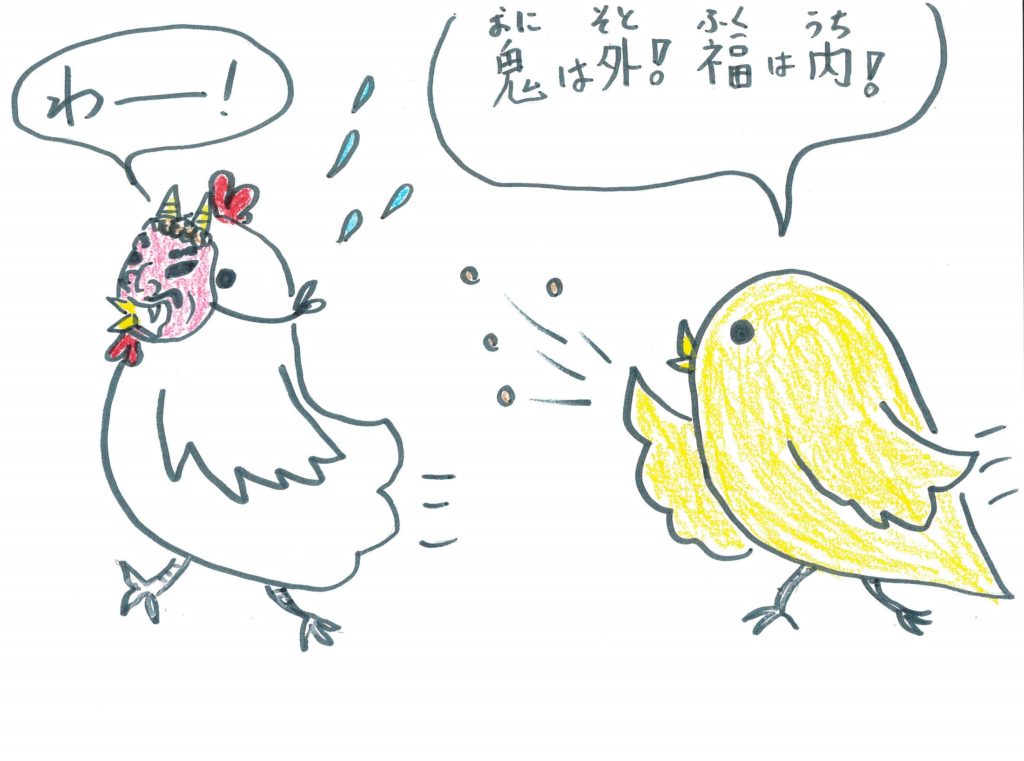
節分でやることは地域によって少し違いますが、節分と言えば「豆まき」と「恵方巻」が有名です。「豆まき」では、煎った(いった)豆を鬼(鬼のコスチュームを着た人)にむけて投げます。煎った豆の事を、「福豆(ふくまめ)」と呼びます。人々は、豆をまくときに「鬼は外、福は内」と言います。「鬼(おに)」というのは、節分では邪気(じゃき)の象徴(しょうちょう)とされています。福豆を投げて悪い邪気を家の外に出し、その代わりに福を家に入れるという事です。
豆まきをした後は、自分の年齢(ねんれい)の数の福豆を食べます。そうすると、一年間健康でいられると言われています。

The things people do on Setsubun differ from region to region, but the main events are mamemaki and ehomaki. Mamemaki literally means throwing beans. People throw roasted soy beans toward a person wearing an oni costume and say “Oni out, good luck in!” On Setsubun, the oni is a symbol of all evil spirits. The roasted soy beans are called fukumame, or lucky beans. By throwing fukumame at oni, the bad spirits are chased away from your house and good spirits are invited in.

「恵方巻(えほうまき)」というのは、7種類の具を入れた太巻き(ふとまき)の事です。その年の恵方を向いて無言で食べると、願い事(ねがいごと)が叶(かな)ったり、病気にならないようになったり、商売がうまくいくようになると言われています。

Ehomaki is a long sushi roll with 7 kinds of ingredients. If you eat an ehomaki looking towards this year’s lucky direction without say anything, your wish will come true, you won’t get sick, and your business will grow.

私はいつも話しながら食べるので、あまり効果はありませんね。
恵方巻はとても大きいです。一本全部食べるのは大変ですから、たくさんの人は半分だけ食べたりします。

I usually chat when I eat it, so I don’t get that effect. Ehomaki is very big, so it’s hard to eat the whole thing. Many people just eat half of it.

日本ではもう旧暦は使っていませんが、旧暦に関係のある行事がたくさんありますからおもしろいですね。

Japan doesn’t use the lunar calendar anymore, but many events related to lunar calendar like Setsubun remain. It’s very interesting.

それではまた、3月に会いましょう!

今月の文化 2018年1月 寒い時に言う言葉

こんにちはみなさん。
2018年が始まりましたね。ことしもどうぞよろしくお願いします。

Hello everyone. Happy New Year! It’s 2018! Yay!

先月のブログにも書きましたが、今年から、タイトルを「今月の文化」にします。漢字だけじゃなくて文化の事も紹介していこうと思います。

As I mentioned last month, I am going to change this blog theme to “This Month’s Culture” from “This Month’s Kanji” since I’ve been introducing culture along with kanji.

今月は日本で大雪が降りました。とても寒かったです。
1月2月は気温が低いので雪が溶けにくいですね。雪が積もるときれいですが、運転するのはとても大変です。だから私は、雪は好きですが同時に嫌いでもあります。

This month, there is a lot of snow in Japan. It was very cold here. January and February are very cold, so the snow won’t melt much. It looks pretty if white snow piles up, but it’s terrible to drive on the snow. So I like snow, but the same time, I dislike snow.

今月は、とても寒い時に言う言葉について紹介しようと思います。

This month, I’m going to introduce phrases which you can use in the cold weather.

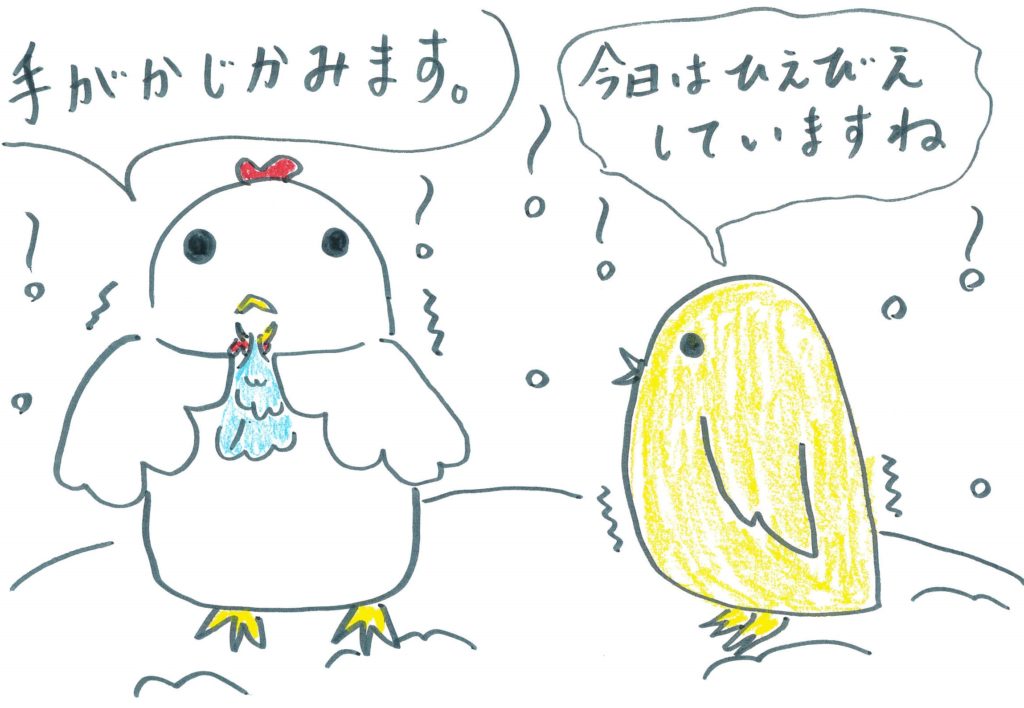
①かじかむ
When you feel you have difficulty moving your fingers due to the severe cold, people call itかじかむ. Here is how to use the word:

→寒いので指がかじかみます。
It’s so cold that my fingers are numb.
→かじかんだ手で財布からお金をだすのはむずかしいです。
It’s hard to take money out of my wallet with my frozen hands.

②息が白い(いきがしろい)
It literally means your breath is white. The atmosphere is so cold that you see can your breath.
Here is how to use the phrase:

→気温が下がったので吐く息が白いですね。
It’s cold, so my breath is white.
→家の中にいるのに息が白いです。
Even though I’m inside (it’s so cold that) my breath is white.

③冷え冷えしている(ひえびえしている)
This basically means very cold/chills. You can use this word to not only to describe the temperature but also to describe relationships. It is used like this:

→今日は冷え冷えしていますね。吐く息が白いです。
It’s cold isn’t it. My breath is white.
→私と彼の関係は冷え冷えしている。
My relationship with him is cold (i.e. not good).

④寒さを通り過ぎて痛い(さむさをとおりすぎていたい)
This means, “It’s so cold that it hurts.” When the temperature drops significantly, you will feel pain instead of cold. Here is how to use the phrase:

→もう寒さを通り過ぎて痛いですね。
It’s so cold that it hurts.
→今日は気温がマイナス5度だそうです。寒さを通り過ぎて痛いでしょうね。
It looks like it’s going to be minus 5 today. It’s going to be painful.

風邪をひかないようにきをつけてくださいね。
それではまた2月に!

Please be careful not to catch a cold. See you in February!

今月の漢字 2017年12月 クリスマスケーキ

みなさんこんにちは。
12月になりました。NihongoForumは今月で1年たちました。私は去年の今頃(いまごろ)はまだアメリカにいました。もう1年たったという事にとても驚いています。1年が過ぎるのはとてもはやいですね。
みなさんの2017年はどんな1年でしたか?私は1年間新しい事をたくさんやって、とても充実(じゅうじつ)していました。

It’s December. It’s been a year since NihongoForum started. I was still in the US in December last year. I am so surprised that one year passed so quickly. How was your 2017? I did a lot of new things this year, so it was very fulfilling year to me.

アメリカの友達から、日本ではKFCに行列(ぎょうれつ)ができると聞きますが、今年はどうですか?という質問がありました。私はKFCのクリスマスセットを買ったことがないのですが、若者はパーティーをするときにピザやチキンを買う事があるようですから、注文している人もいると思います。

My American friend asked me if there is a long line at KFC for Christmas dinner. I haven’t had KFC’s Christmas chicken set before, but when young people have a party they tend to buy bunch of fried chicken and pizza. So they might order KFC’s Christmas set or something like that.

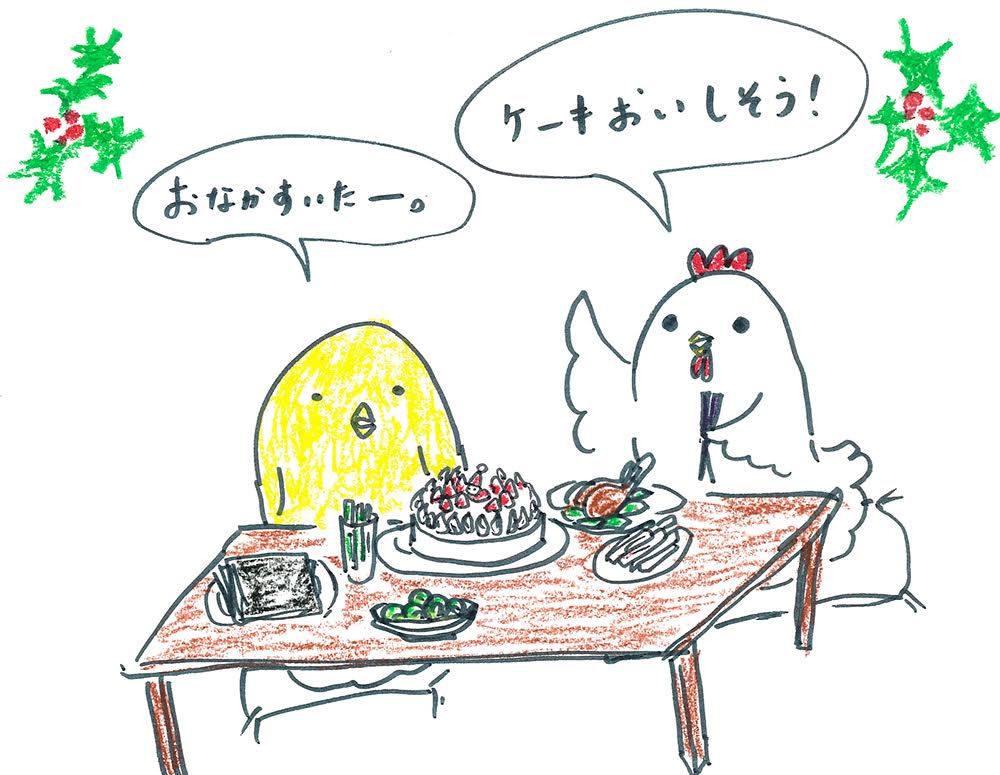
日本ではお祝いやお祭りをするときに寿司を食べる習慣があります。最近では寿司ケーキというものがあって、ちらし寿司をケーキの形にしたり、家族で手巻き寿司をしたりすることもあります。洋食を食べたり和食を食べたり人によって違うのですが、クリスマスケーキを食べる人はとても多いです。

In Japan, it’s a tradition to have sushi when people celebrate things. I saw advertisement for a “sushi cake,” which is a decorative sushi arrangement which looks like a cake. You can try an image search for 寿司ケーキ to see. You’ll find many cake-looking sushi images. Some people have temaki-zushi for dinner too. For dinner, people eat a variety of things from Japanese food to Western food, but for cake, there are fewer variations. People order “Christmas Cake” which is basically a sponge cake with strawberries and some Christmas decorations on it.

色々な文化が混ざって色々な物を食べたりお祝いしたりするので、新しい文化が入ってくるというのはおもしろいですね。

It is fun to see how people interpret other cultures, import some ideas, and blend them in to their own culture.

PS: 最近は漢字ではなくて文化を紹介していますので、このブログは来年から「今月の文化」というタイトルに変えようと思います。

PS: Recently, I have been writing more about cultural things instead of sharing one kanji, so I’m going to change the blog theme to Japanese culture instead of kanji.

来年もよろしくおねがいします。良いお年を!
Well, thank you for the wonderful year and see you next year 😊
Have a great Christmas and New Year.